
 Posted by
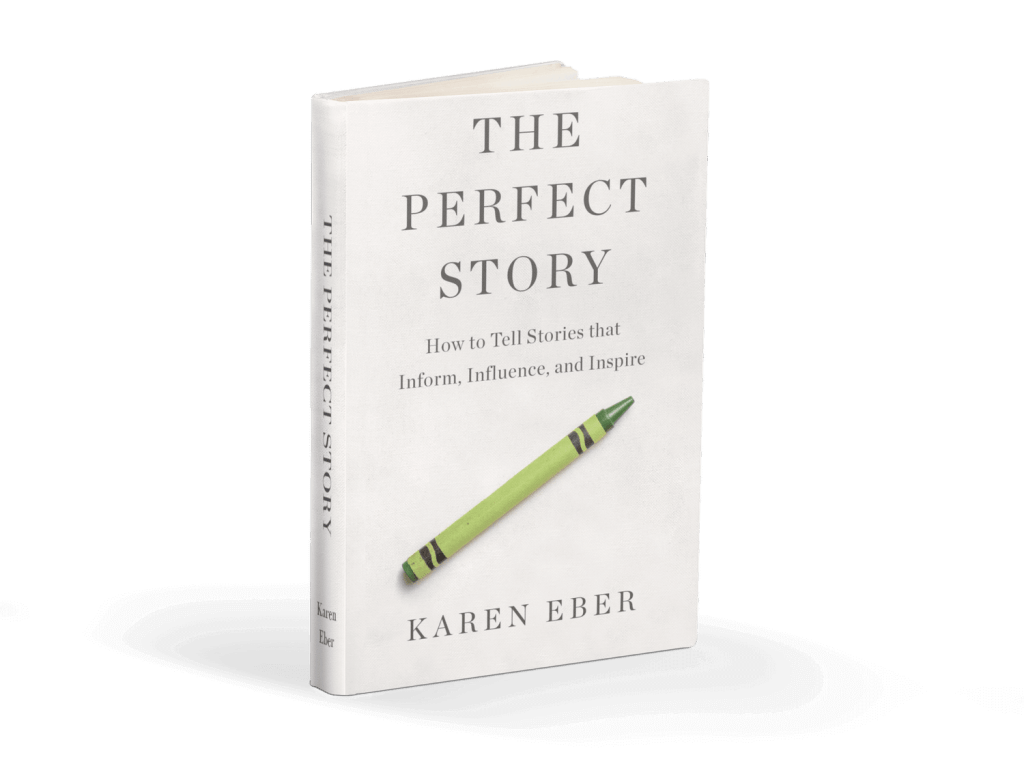
Good storytelling can inform, influence, and inspire, according to Karen Eber, author of the book The Perfect Story. In healthcare, a good story can inspire digital transformation and make new ideas stick. But how do you tell a good story?
I couldn’t start another way than telling you a story. Let me share a story template that healthcare startups often use when pitching to investors: “John, a 45-year-old father, is very stressed by work. With our digital health companion app, he can practice mindfulness and manage his well-being better every day. There are 4 billion people like John, and we can help them with our app”. Will you buy this app? What’s wrong with this story?
There’s nothing differentiating the app in the story, and there’s not enough for me to connect with as the listener. I’d be more interested if the developer could help me understand John’s challenges and how they impact his life and job. But your story is quite common.
People are told to tell a story, so they do. They think, “Look, I told a story. This is amazing.” But so often, there isn’t enough in the story for the audience’s brain to engage with it. They come away wondering, “What did I do wrong? I told the story. Why didn’t it work?”
It’s not specific to healthcare; it’s every industry.
You claim that storytelling is more trustworthy than presenting just data. Can storytelling be applied in healthcare, where evidence matters most, and it’s vital not to overpromise or manipulate emotions?
Yes, it can be used. I don’t like to talk about manipulating emotions because that’s misleading. We decide through emotions based on our experiences. Our brain goes through this long-term memory—this library of files—to make predictions based on our experiences and emotions. So, we’re never void of emotions in decision-making.
The reason storytelling is important in a research-based setting is that data doesn’t speak for itself. When people put up a chart or research but don’t share the story behind it—why it was done, what questions were answered, what was learned—they leave it up to each person to make their interpretation.
Sharing stories brings insights to research and data, helping people come to a shared understanding to have debate, discussion, and disagreement. We do have emotions about data. Each person has an amount they’re willing to spend for a vacation, a car, or a house, and that’s different for everyone. When you hear a number outside of what you think is acceptable, you react. Stories give meaning to data and help you understand how to process it and what to do with it.
Despite the power of data, why do CEOs often love slides full of data that are forgotten after a few seconds and are afraid to show vulnerability by focusing on stories?
In the past ten years, our data savviness has increased dramatically. We can collect more data and have better visualization and analytical tools. The bias is that data are fact and more data are better, but more is just more. People put up more charts because it seems factual, scientific, and evidence-based. However, some leaders love this because it’s a conversation-stopper.
When you put up a chart, everyone in the audience is trying to make sense of it, especially if no one explains it. It doesn’t always turn into a helpful discussion, and people aren’t sure what they want to do with the data.
They collect data but haven’t thought through why: Are we trying to monitor, decide, or learn different things? Data is put up, but none of these steps have been done, so conversations stop. It seems efficient and credible, but it misses true understanding and insights. There are important pieces in the data that people need to understand. The combination of increased data, better viewing tools, and people not being savvy about the data creates a false sense of efficiency, but many opportunities are missed.
Are there some exceptions where you suggest focusing on data instead of a narrative story?
There are opportunities to focus just on data and times to share a story without a chart. It depends on what you want the audience to understand, decide, debate, or do. If you have regular data and a dashboard, you review every week with no changes, and your team understands why you’re collecting it and what you’re doing, you don’t need a story every time.
But if there’s an outlier, a new team member, or a new piece of data, it’s important to share that to ensure the same understanding. Milestone moments are helpful for storytelling. On the flip side, if you share a compelling story, sometimes you don’t need a chart. You can convey your message verbally through the story. You don’t always need both the story and the data.
Creating a good story sounds easy, but it’s not. Can everybody become a good storyteller?
Creating a compelling chart isn’t easy either, yet we often prefer spending time there over making a good story. Anything about data can be viewed as hard if people aren’t familiar with it or don’t know how to work through it to create understanding. Anyone can learn to be a great storyteller. It begins with understanding your audience and what you want them to experience or do from the story, then building a story to achieve those things. That’s possible with data, too.
When is a story ready to be released, and is there a checklist to follow? What do I do if I have a meeting tomorrow and can’t test the story, as you suggest in your book?
Storytelling exists on a continuum, from spontaneous, unpracticed stories told during meetings to carefully crafted narratives.
I encourage people to use a structure: set the context, describe the conflict, the outcome, and the takeaway. This organizes the story for the storyteller and makes it easier for the audience. If you know you’re giving a presentation next week, put more effort and practice into it. Build the story using the structure, and think about how to make it compelling for the audience and what you want them to experience.
More time yields a better story. Building a story, taking a break, and revisiting it improves it. Start with your audience, clarify what you want them to feel and do, consider their mindset, and identify the idea that will help you achieve your goal. Use the structure, layer on elements that make the brain pay attention, build tension, incorporate unexpected elements, and engage the senses. Experiment with the order of the story. There isn’t a specific list, but following these steps brings you closer to a great story. Testing it is the best way to know if it works.
What if it’s difficult to specify the audience? Consider a conference with doctors, investors, and hospital managers. How do you handle a mixed audience?
At a conference, think about what the audience shares in common. Why are they there? They have different backgrounds and experiences but share something. If you’re a startup pitching to a VC, think about their interest. Are they interested in making money, doing something meaningful, or being innovative?
Do something similar with any audience. Identify what they share and their potential response or interest. When starting, you may have multiple stories. Think about whether your audience is looking for financial gain or innovation to solve problems.
One of the biggest barriers to storytelling is the fear of making mistakes. How do you craft a story that doesn’t trigger a reaction like, “Oh no, another emotionally cheap story“?
It’s part of how you craft and deliver the story. If the story feels insincere, like the person has told it the same way over and over, it can feel manipulative.
Authenticity is crucial. The story should feel true to the moment and relevant to the audience. Audiences respond when you care about something because they know it’s important to you. If they don’t feel included in the story, it feels manipulative. Every time you tell a story, think about your audience and what you want them to experience. Tailor the story to be meaningful to them.
In your book, you also mentioned not starting a story by saying, “Let me tell you a story.”
Stories follow something. In a job interview, you answer a question with a story. In a presentation, it’s often expected to start with a story. But if you’re on a call, for example, it can feel insincere to jump right into the story.
Establish why you’re together and what you both want to get out of the situation, then pivot to the story. Saying, “Let me tell you a story,” can make it feel like you only want to share the story without meaningful interaction. Always have the story follow something relevant.
Are you ready for an experiment?
Yes, go ahead!
I tried to create a story for our case of John using GPT. Here’s what I got:
In a bustling city, there was a young professional named Sarah. Her life was a whirlwind of deadlines, meetings, and never-ending notifications. Each morning, she woke up to a flurry of emails, each one more urgent than the last, and by the time she left her apartment, her stress levels were already sky-high. Sarah, like many of us, was trapped in a relentless cycle of stress that chipped away at her well-being and joy.
One particularly chaotic afternoon, as Sarah sat hunched over her desk, she felt a sharp pain in her chest. Panic surged through her—was this a heart attack? Rushing to the ER, she was relieved to find it wasn’t, but the doctor’s words haunted her: “This is a warning. Your body can’t sustain this level of stress much longer.”
That night, staring at her ceiling, Sarah realized she needed a change. But how? The pressures of her job and life wouldn’t magically disappear. She needed a way to manage her stress, to find a beacon of calm in the storm.
Does this story resonate with you?
What do you think?
I don’t like it. It sounds like it’s missing authenticity.
I agree. Chat-GPT can give you something to react to, but you shouldn’t take it and use it as your story. AI might be helpful when it’s time to tell a story and you have a blank sheet of paper; sometimes, it is very hard to know where to start.
You need to connect with John’s emotions more. The beginning, describing his stress and pressure, could be told in a way that resonates with everyone who experiences similar stress. We see he feels this pain in his chest, and he’s concerned if there is a heart attack. But in the beginning, that could be told in a way that everyone who experiences that also thinks about those things that they go through. Otherwise, it just sounds like a list of events that’s very easy not to connect with.
To sum up, is there one Holy Grail for a perfect story?
The reason I titled my book The Perfect Story is that I find people are often averse to storytelling. They see someone tell a story with ease and think they must not have that talent, so they avoid telling stories themselves.
The perfect story isn’t ready-made on a shelf. It’s about taking your ideas through a process, adding the elements that capture attention, and perfecting it each time you tell it. There’s no single formula or type of perfect story; it’s the steps you take each time to create the perfect story for your audience and occasion.
How would you rewrite the story about John?
I would focus on the audience of the story. If it is the person meant to use the app, I’d lean into the descriptions of the stress that John experienced to make it relatable to them. This includes describing what is happening in John’s day so that the audience feels like they are there beside him. It also invites the audience into these emotions so they reflect on their own. Until they experience what John feels, they won’t connect with the story. I’d describe what made him use the app the first time. Next, more importantly, I’d include what made him keep coming back to it. The story would highlight the problems the app solves for him. The goal is to connect the audience to John’s experience, so they reflect upon their own and want to seek the same results.

Can I ask you a favor?
Please donate to aboutDigitalHealth to support this not-for-profit knowledge portal. Thank you!
€1.00
 about Digital Health