
 Posted by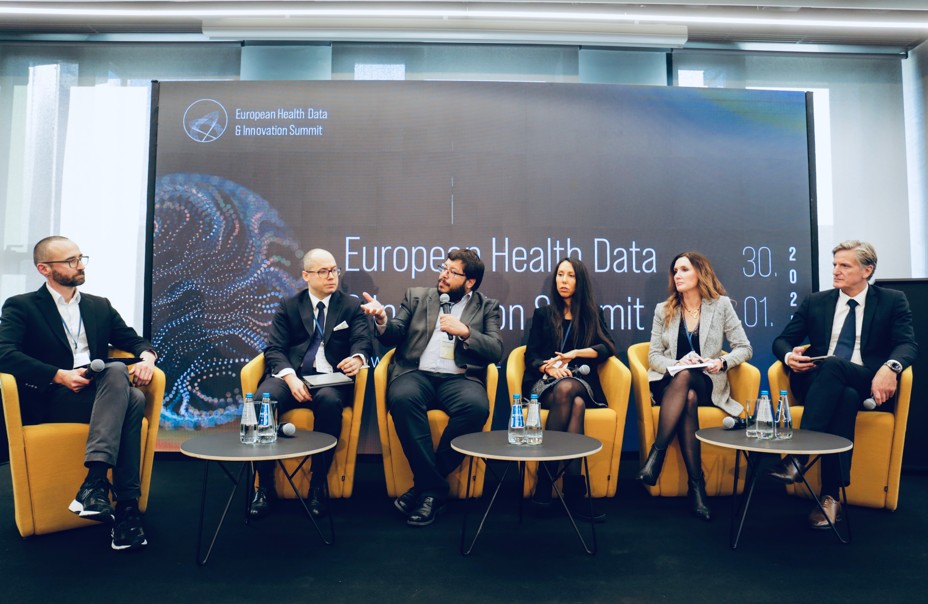
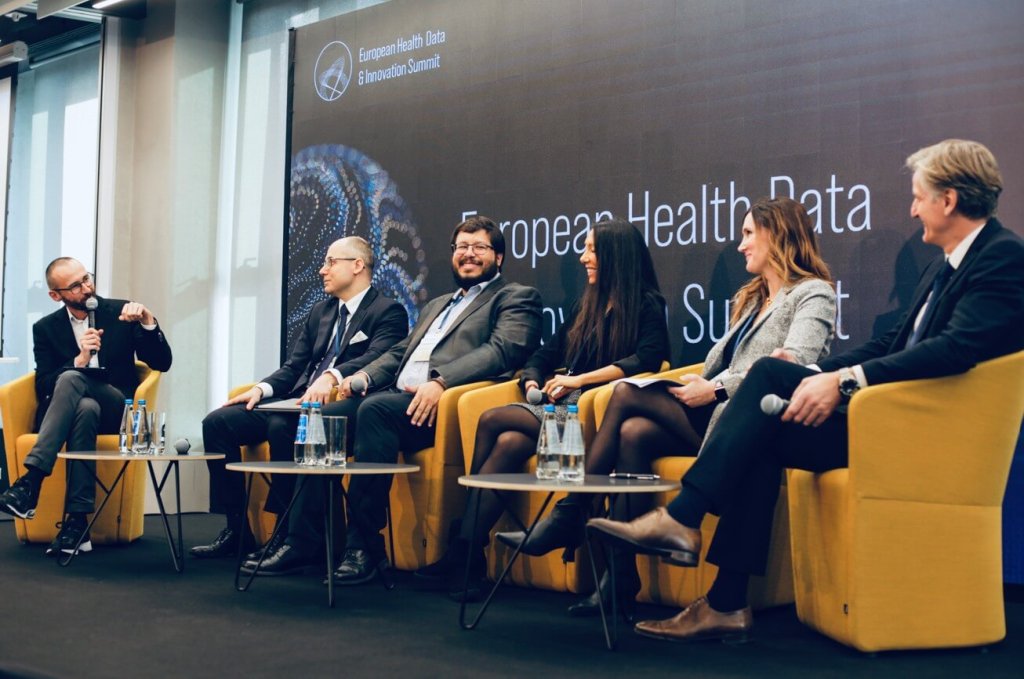
The debate “Future Outlook of EHDS and Digital Health in Europe,” organized during the European Health Data and Innovation Summit, raised hopes for health innovation “made in Europe” but also evoked old regulatory ghosts hovering over the continent.
Innovate or perish. EHDS is about much more than just health data
The European Health Data Space (EHDS) is one of the most ambitious regulatory initiatives regarding healthcare in Europe, right after the cross-border directive. It can open the door to groundbreaking medical research and AI-driven diagnostics, leading to a new era of digital cross-border healthcare. The initiative promises European scientists access to the world’s largest health data repository. Political decisions will finally follow evidence rather than—what is too often the case—a biased political agenda. As a side effect, EHDS will speed up the digitalization of healthcare in member states, improve interoperability, and stimulate the development of artificial intelligence solutions for healthcare.
However, the path to implementation is fraught with challenges—from legal complexities to technological preparedness.
EHDS is not just another regulation; it’s an enabler of data-driven medicine. Europe has to tackle this chance since economic growth and wealth will depend on the competitive advantage in digital technologies and AI. The AI race is on: President Donald Trump “removed barriers to American leadership in artificial intelligence”—or rather, he got rid of the safety brakes in AI development for the sake of a game of power—while small Chinese company DeepSeek triggered a shock on markets by issuing a much cheaper GenAI model than the competitors in the US.
Europe invests only 4% of what the US spends on AI. At the AI Action Summit (Paris, 10-11 February), Commission President Ursula von der Leyen launched InvestAI, an initiative aimed at mobilizing €200 billion in AI investments. This includes a new European fund of €20 billion for 4 AI gigafactories across the EU.
The debate at the European Health Data and Innovation Summit also addressed AI-related issues, touching on the digital economy more broadly, as reflected in Mario Draghi’s 2024 report, The Future of European Competitiveness. Draghi urged the EU to increase annual investments by an additional €800 billion to enhance Europe’s competitiveness and resilience. He warned that “the EU’s weak position in AI development risks undermining its competitive advantage across several industrial sectors” and that “while the EU’s GDPR and AI Act are commendable, their complexity and potential overlaps may hinder AI developments by EU industry actors.”
The invisible hand of data exchange: healthcare professionals
Artur Drobniak, President of the Regional Medical Chamber in Warsaw, underscored a critical issue in the implementation of EHDS: awareness. “Ask any physician what EHDS is, and they might recognize the name, but few will understand its actual implications,” he remarked. Drobniak outlined a three-fold strategy to bridge this gap: education, quality assurance, and ethical training.
Doctors, he argued, must not only grasp the technical framework but also develop a responsible mindset regarding data usage. “We will emphasize ethical data practices and ensure physicians can seamlessly integrate patient summary data into their workflows,” according to Drobniak. Without this, EHDS risks becoming an underutilized regulatory framework rather than a transformative tool.
Regulatory concerns dominated the discussion. GDPR remains a significant obstacle, with Drobniak noting that many doctors fear legal repercussions if they share data. “We must shift from a compliance-first culture to a responsible-use culture,” he urged. Clear guidelines and trust-building initiatives will be essential for EHDS to function effectively.
For cancer research, EHDS could be a game-changer. Salvador Capella-Gutierrez, Coordinator of the European Open Science Cloud for Cancer project (EOSC4Cancer), emphasized that real-world data is often messy and incomplete. “Sometimes, everything looks perfect on paper—until you start answering specific research questions and realize the gaps,” according to Capella-Gutierrez. Interoperability and data accessibility remain crucial hurdles. Without addressing these challenges, EHDS will fall short of its potential to drive meaningful research breakthroughs in cancer, potentially leading to new and more effective treatments and beyond.
Europe’s way. We can be slow, but we perform in the long term
With a four-year timeline to make EHDS operational, the European Commission (EC) faces a tight timeline. This is realistic since the preparations started already years ago. Mélodie Bernaux, Policy Officer at the Digital Health Unit of the Directorate-General for Health and Food Safety (SANTE C1) at the European Commission, admitted, “We have been working very hard during the negotiation phase because the timeline is extremely tight.” She expressed confidence in launching EHDS before 2029 but acknowledged the need for continuous stakeholder engagement to navigate the complexities ahead.
Europe’s cautious approach to AI and data sharing often faces criticism, particularly when compared to the aggressive strategies of the U.S. and China. But Bernaux defended the European mind shift, stating, “We innovate with purpose. We put individuals at the center, ensuring healthcare data remains safe, secure, and trustworthy.”
The private sector will play a crucial role in EHDS adoption since the data flows from the electronic health records and repositories created by different IT and database developers. Dr Myriam Fernández, Head of Health Innovation for EMEA at Amazon Web Services (AWS), highlighted that success requires more than just digitizing health records. “We need to look beyond what’s stored in electronic health records today and focus on maintaining a dynamic, clinically valuable system,” she said. “As citizens, we walk with thousands of health data points generated daily. Healthcare data doubles every two years, and 97% is trapped in unstructured formats. Imagine unlocking this data mine for the betterment of European citizens! AI, analytics, and machine learning must be employed to ensure EHDS delivers tangible benefits to both healthcare providers and patients”.
Jean-Marc Bourez, CEO of EIT Health Europe, touched upon the importance of skills development. “We are financing and developing education and training courses to address the EHDS skills gap,” he explained. The ability to effectively use health data will determine EHDS’s success as much as the technological infrastructure itself. He further emphasized, “Europe has an opportunity to lead in ethical AI-driven healthcare, but we must ensure that our workforce is prepared to utilize these innovations effectively. Without adequate training, even the best technology will fall short.”
France and Finland share their lessons learned on EHDS implementation
France and Finland are among the frontrunners in EHDS adoption, albeit with different approaches. France has taken a citizen-focused route, organizing a public consultation where 29 randomly selected citizens debated EHDS’s impact over three weekends. They produced 52 recommendations covering data sovereignty, security, transparency, and environmental responsibility. France’s centralized electronic health record system also provides a strong foundation for EHDS integration.
Emilie Passemard, Head of Regulatory and European Affairs unit at the Ministry of French Social Affairs and Health, emphasized the importance of involving citizens early in the process. “Public trust is the foundation of EHDS. If people don’t feel secure about how their health data is being handled, the system will fail before it even starts,” she stated. She highlighted that the consultation process was designed to ensure transparency and accountability while aligning EHDS implementation with citizens’ expectations.
Meanwhile, Finland has prioritized governance and early preparation. Joni Komulainen from the Finnish Ministry of Social Affairs and Health, who personally negotiated the EHDS regulation, highlighted Finland’s long history of health data legislation. The country established a steering board and working groups to navigate EHDS implementation, ensuring all stakeholders—from researchers to policymakers—were involved from the outset. “Finland has always been at the forefront of digital health. We see EHDS as a natural continuation of our commitment to data-driven healthcare,” Komulainen noted.
Both nations face challenges: France must align national legislation with EHDS requirements, while Finland must ensure interoperability across Europe. Financial planning is also key: Finland has allocated EHDS implementation funds through 2029, while France is leveraging EU funding to facilitate the transition.
Beyond legislation, France is also exploring ways to integrate EHDS into existing healthcare workflows. Passemard stressed, “Doctors and hospitals need practical tools, not just policies. Our goal is to create a system that integrates seamlessly with the daily reality of healthcare professionals.” The French government is working on pilot projects with hospitals to test EHDS in real-world settings before full-scale implementation.
Finland, on the other hand, is focusing on technical readiness. The country has already conducted impact assessments and stress tests on its digital infrastructure to ensure smooth adoption. Komulainen pointed out that interoperability is Finland’s top priority: “We must ensure that the data exchange between countries is seamless. It’s not just about national readiness; EHDS must work across Europe.”
Additionally, both France and Finland recognize the importance of industry collaboration. France has engaged with technology providers to develop robust cybersecurity measures to protect sensitive health data. With its strong public-private partnerships in digital health, Finland is actively working with tech firms to refine data-sharing protocols.
The following steps for both countries include refining legal frameworks, ensuring interoperability between national and European health data infrastructures, and maintaining an ongoing dialogue with stakeholders.
The first guidelines for data sharing by TEHDAS2
Markus Kalliola, Programme Director at The Finnish Innovation Fund Sitra and the coordinator of TEHDAS2, emphasized harmonization as the key to EHDS’s success. “If inconsistencies between member states persist, EHDS will never achieve its full potential,” he warned.
TEHDAS2 initiative focuses on creating 20 technical guidelines and standards for the secondary use of health data to support harmonized EHDS implementation; the project involves 29 European countries. “EHDS will allow researchers and other data users to apply for access through a unified system, conduct their analyses in secure environments, and publish their findings with confidence,” Kalliola explained. Four key guidelines have already been released for public consultation.
Another critical aspect of TEHDAS2 is ensuring that data sets are appropriately described and categorized for easy discovery and usability. According to Kalliola, “A single data set description standard is crucial. Without it, interoperability will remain a theoretical concept rather than a practical reality.” The project is working closely with technical working groups and public consultations to refine metadata models that comply with legal requirements while maximizing accessibility for researchers. Kalliola emphasized that Finland’s experience in handling secondary health data serves as a blueprint for other European countries. “We need to make sure that EHDS is not just a compliance exercise but a system that benefits patients, researchers, and healthcare providers alike,” he stated.
EHDS is there. Time to take action
The success of EHDS depends on educating healthcare professionals, modernizing national digital infrastructure, creating a clear framework for data sharing, and fostering trust among both patients and providers. However, perhaps the most important thing is the eagerness and willingness to pursue this vision for the future of health care rather than focusing solely on ad hoc fixes. As Mélodie Bernaux aptly summarized, “We need to keep the conversation going with all stakeholders. EHDS will only become a reality if everyone puts their hands on it.”
Europe is at a crossroads. If EHDS is implemented effectively, it could redefine digital health on a global scale. If not, it risks becoming another bureaucratic ambition that never fully materializes. The coming years will determine which path it takes.
Wrapping up the debate, Artur Drobniak emphasized the importance of awareness and education among healthcare professionals: “No matter how advanced our digital infrastructure is, if doctors don’t understand how to use EHDS in their daily practice, we will not achieve real change. We need a cultural shift, not just a technological one.”
Salvador Capella-Gutierrez pointed to the significance of interoperability: “We cannot afford to work in silos. EHDS must ensure that researchers can access, analyze, and share data seamlessly across Europe if we want to accelerate discoveries in medicine.”
Mélodie Bernaux reaffirmed the European Commission’s commitment to ensuring EHDS is both functional and secure: “We are building EHDS not just for today, but for the future. It must be a system that grows and evolves with new technologies while always maintaining trust and safety for patients and healthcare providers.”
Dr Myriam Fernández highlighted the private sector’s role in driving innovation: ” At AWS, we welcome the EHDS as an important step towards unleashing the vast potential of health data to benefit citizens across Europe and beyond. The blueprint for success focuses on driving Cloud-first policies to unlock data potential, advancing skills development, and establishing a rock-solid trust framework for public-private partnerships that will drive innovation acceleration. This is about transforming healthcare for 450M+ Europeans.”
Jean-Marc Bourez underscored the urgency of skill development: “We cannot talk about digital transformation without investing in people. EHDS will only succeed if we equip healthcare workers and researchers with the right digital skills to make the most of this opportunity.”
Data is an essential resource for economic growth, competitiveness, innovation, and a healthy society,” according to Urszula Demkow, Secretary of State at the Polish Ministry of Health. And EHDS is about connecting data across all the EU member states to create the most powerful data ecosystem for a healthier society.
7 priorities to get EHDS right
- Infrastructure Modernization. Scaling AI capabilities and managing vast health data volumes.
- Skills Development. Addressing Europe’s digital skills gap in healthcare.
- Regulatory Clarity. Balancing innovation with strict privacy protections.
- Stakeholder Engagement. Ensuring collaboration between policymakers, industry, and academia.
- Patient-Centric Approach. Demonstrating clear benefits to patients and healthcare providers.
- Interoperability. Establishing technical standards for seamless data exchange.
- Trust and Adoption. Building confidence among healthcare professionals and the public.

Can I ask you a favor?
Donate to AboutDigitalHealth.com and help sustain this not-for-profit knowledge portal. Every contribution makes a difference. Thank you!
€1.00
 about Digital Health