
 Posted by
Fitness trackers have evolved from simple step counters into personal health coaches. Now, AI gives them new powers, transforming how people use data to achieve their fitness and health goals. Jörn Watzke, Senior Director at Garmin Health, explains how wearables contribute to both scientific research and personal well-being.
I remember when Garmin was primarily known for developing smartwatches for athletes. When did the company realize that the data collected could not only improve speed and endurance but also enhance overall health and quality of life?
Garmin introduced the first running smartwatch, the original Forerunner, in 2003. Over the following decade, subsequent models featured enhanced GPS capabilities, longer battery life, and improved calorie-burning estimates. In 2014, vivofit – a minimalist fitness tracker catering to everyday consumers – was introduced. This was also the same year the Garmin Health division was founded. At this point, Garmin realized the analytics of its smartwatches and fitness trackers could be utilized in a B2B model to empower third-party digital health solutions and wellbeing programs. The next decade resulted in significant improvements in health tracking with the inclusion of an optical heart rate monitor (as one example) and the ability to track sleep, stress and, more recently, heart rate variability (HRV).
Can you please explain the technology inside a smartwatch that enables it to track physical activity or provide navigation during trekking?
Continuous heart rate monitoring provides perhaps the most comprehensive health data in any area, allowing people to see stress tracking, Body Battery™ energy monitoring, respiration rate, and sleep tracking. It also contributes to quantifying VO2 max. Garmin wearables feature an optical (PPG) sensor built into the back of the device. Heart rate is detected by shining a green light through skin and reflecting off red cells in blood vessels.
Garmin PPG sensors have the sensitivity and accuracy to measure heart rate variability, an important metric that allows expanded insights into stress, recovery, and sleep phases.
For navigation, Garmin utilizes GPS receivers to calculate 2D (latitude and longitude) or 3D (latitude, longitude, and altitude) position. 3D positioning requires more satellites than 2D. With this information, GPS can be used to calculate speed, trip distance, time to destination, sunrise/sunset, and more.
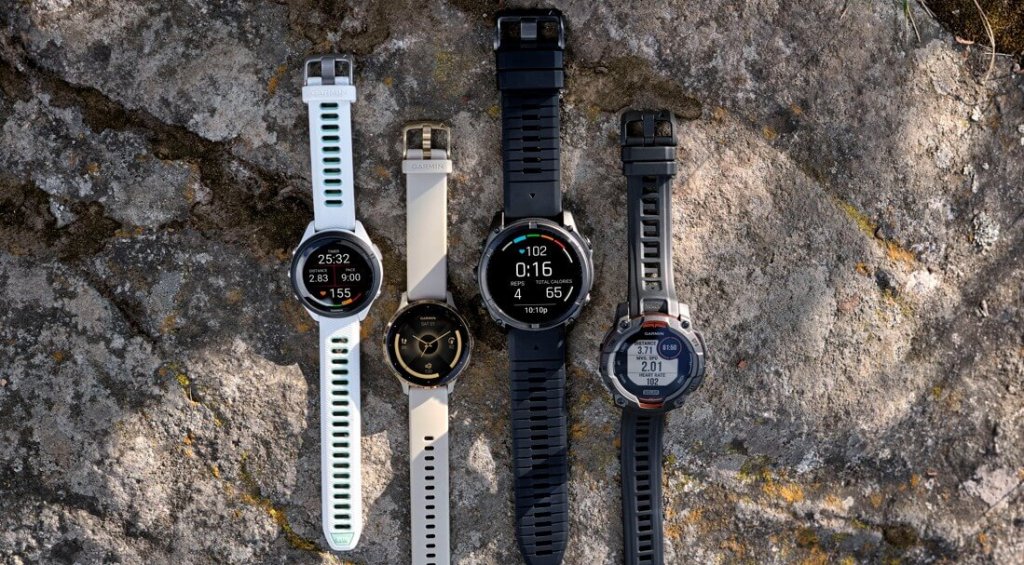
How are health-related features designed? Let’s take a simple example: the sleep score.
Health-related features, like sleep score, rely on the data available from the sensors in the smartwatch or fitness tracker. For sleep tracking, stages – like light, deep, REM, and awake – and total time spent asleep are assessed using a combination of heart rate, HRV, and body movement data. Newer devices record additional metrics like skin temperature change, breathing variations, and blood oxygen saturation (via pulse ox), providing even more nuanced reporting.
Measurements not only inform better decisions but can also significantly impact users’ lives. What steps does Garmin take to ensure that every recommendation is made responsibly?
Garmin leverages peer-reviewed data and recommendations from leading authorities to inform any recommendations about health or exercise. For instance, sleep stage recommendations are backed by reports from the National Sleep Foundation. Another source of information is the Centers for Disease Control (CDC). Additionally, Garmin devices and features are rigorously evaluated through a global beta-testing program, ensuring a high standard of quality prior to being released to the general public.
Users follow their device’s advice only if they trust the technology. How is this trust built and maintained?
Since launching the Forerunner in 2003, Garmin has strategically grown its portfolio of smartwatches and fitness trackers, expanding into categories like Advanced Wellness.
This means understanding the needs of different users, taking the time to develop the sensors and technology necessary, rigorously testing and retesting products before launch, and educating consumers about the science behind new features. It is a long and time-intensive process, meaning Garmin prioritizes a high standard of excellence instead of rushing products to market.
With the advancement in sensor miniaturization and computational power, smartwatches today can perform tests that, until recently, required medical labs – like SpO₂ measurements or ECGs for atrial fibrillation detection. How fast is this technological evolution happening?
The technological evolution of smartwatches into sophisticated health monitoring devices has not only been fast, but the pace is accelerating. In just the last few years, we’ve seen wearables transition from fitness trackers to devices capable of also performing medical functions, such as sleep apnea risk assessment, cardiac arrhythmia detection, and tools related to women’s health.
Wearables are increasingly capable of providing real-time, continuous health data that can be valuable for both personal wellness and clinical insights, leading to greater interest from healthcare providers in integrating this data into patient care. We’re truly just at the beginning of what these devices will be capable of in the near future.
How is AI changing what can be measured? Do we need more sensors, or can better algorithms extract more value from existing data?
AI and machine learning have the ability to analyze large amounts of data and identify correlations previously unrecognized or unexplored by researchers. However, correlation does not equal causation, and these revelations still need to be vetted before being taken as actionable advice for consumers.
It is not a matter of more sensors or better algorithms, but rather a focused analysis of AI findings. This is to protect the end user and reduce unintended misinformation, a key flaw of current AI engines. When AI insights are verified, personalized feedback and advice become possible, a huge benefit for consumers.
What’s the next big sensor we could expect in smartwatches? Could blood analysis on the wrist become a reality?
The Garmin team is continuously evaluating where to invest time in research and development. The biggest breakthrough in sensor technology would be widely usable and valuable to a large contingent of users. Blood analysis would be an interesting development, but noninvasive sensors remain a focal area to ensure mass market adoption.
Do you agree that, in the near future, most health data used by doctors – and often pre-analyzed by algorithms – will come directly from individuals?
Medicine, as an industry, often moves slowly. You can see this with the multiyear implementation of medical recordkeeping in many countries around the world. We certainly believe more and more physicians will want to utilize wearable data for disease mitigation, monitoring, and rehabilitation.
The advantages of increased data points and remote monitoring capabilities are too strong to ignore. However, it’s premature to say “most” physicians will adopt this new way of patient care in the near future. The tipping point will occur as medical students begin learning best practices associated with incorporating wearable data into treatment.
Real-time data can already be used in meaningful ways, such as in research. How do Garmin devices contribute to clinical trials or life sciences studies? Can you share a few examples?
Garmin wearables have been used in over 1,000 research studies to date. Because of our free Garmin Health API and extensive product portfolio at various price points, many pilot studies or small research opportunities find Garmin to be an ideal partner. As those studies expand, researchers often want to implement SDK to receive raw, real-time data in greater granularity. This level of customization means Garmin is a great fit for a wide variety of studies in various focus areas. Here are some examples:
- Study from Kyushu Institute of Technology: The study used Garmin fitness trackers to collect data like sleep duration and step count from Parkinson’s patients to find patterns related to the “wearing-off” (WO) of their medication. It found that changes in sleep and activity, recorded by the Garmin devices, could help predict when symptoms would return, supporting better management of the disease.
- Study from Maastricht, Netherlands: A four-week study using Garmin Forerunner and HRM-Dua found that music paced 7.5–10% faster than baseline cadence boosted running cadence without affecting speed or heart rate, showing music can enhance form and reduce injury risk without added effort.
- Study from the University of Calgary: The study uses Garmin devices to objectively track physical activity in people with acute leukemia undergoing stem cell transplants, helping to measure how active they are during different stages of treatment. This data supports the evaluation of a personalized exercise program designed to improve recovery and quality of life.
- Study from Universidad de Guayaquil: The study successfully integrated a Garmin smartwatch with a mobile app and web system to help patients and doctors monitor hypertension in real time. The Garmin device made it easier for patients to follow their treatment plans and for doctors to track vital signs continuously, improving overall care.
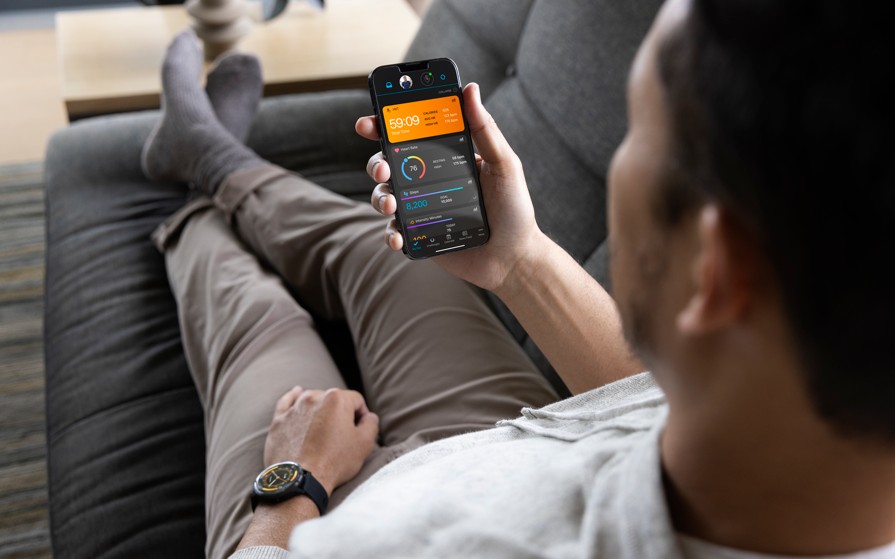
How does Garmin collaborate with researchers and medical centers to improve its technologies?
Each time Garmin collaborates with research institutes, universities, or health systems, it provides valuable information about how Garmin devices and the Garmin Health API and SDK integration function in a specific use case. These vary widely, providing valuable insights about data granularity and transfer, which impact the development of new features and functionality.
What are the top three parameters most commonly tracked by users? Why are these particular metrics so important?
For active tracking, running, cycling, and hiking are some of the most popular activities. And for passive tracking – meaning the user doesn’t have to turn it on each time – steps, heart rate, and sleep are extremely popular.
The active tracking showcases how many Garmin users identify as recreational athletes, committing to spending time on physical fitness. The passive tracking is particularly important because it provides all users with general health data they can use to make behavioral changes for improved wellness. All people have a heart rate, need sleep, and move throughout the day, making these metrics almost universally applicable to users.
Do you think generative AI will change the way we interact with smartwatches? Are AI agents coming to wearables soon?
In April, Garmin unveiled Connect+, which features its new AI functionality – Active Intelligence – on the Connect app. This AI model was trained with over 8 trillion tokens of text data. With Active Intelligence, users receive personalized insights about recent activities or health trends. While it does not offer recommendations, the information allows users to make informed decisions about their health and fitness.
Many Garmin Health collaborators are already using AI in their digital health solutions. For example, Uptivo, a gym technology provider, showed NATE, its AI chatbot, at this year’s FIBO. NATE analyzes Garmin data (if users opt in to share) and can answer questions about sleep, fitness, and make recommendations.
It’s safe to assume this trend will continue in the areas of fitness, wellness, and health.
If you could introduce one new sensor to a smartwatch, what would it be?
Noninvasive sensors that can provide previously unavailable biometric data would be a significant addition to any smartwatch. In particular, glucose monitoring has widespread applications for diabetes management, metabolic health, and overall fitness.

What about predictive analytics? Is this something we can expect to see in Garmin watches soon?
Garmin smartwatches already include several predictive analytics when it comes to fitness. The best-known feature is Race Predictor, which estimates how you can perform at various race distances for running. It takes into account recent mileage, training load and VO2 max.
Many of our fitness trackers also have Recovery Time, a predictor of how long someone should rest after an activity. It also incorporates acute to chronic training load ratio and VO2 max, as well as excess post-exercise oxygen consumption (EPOC).
On the health tracking side, Sleep Coach provides recommendations on how much sleep is needed that day based on the previous night of sleep.
As Active Intelligence becomes increasingly robust, new predictive analytics could become available. However, Garmin takes making any type of recommendation extremely seriously and would rigorously evaluate such offerings before adding them to its existing features.
Finally, can you describe what a day in the life of a Garmin watch user might look like 10 years from now?
With so many products and features currently in development, it’s difficult to encapsulate everything into one Garmin user’s experience. In a decade, Garmin customers will continue to be able to select the smartwatch or fitness tracker that best aligns with their passions, goals, and lifestyle.
From a health standpoint, users will be able to better take advantage of their data not only through the Garmin Connect app but also with third-party digital health solutions and wellbeing programs, which Garmin Health is already doing through its collaborations. We will see a vast increase in specialized care solutions and an emphasis on prevention of common comorbidities. Metabolic health will become a focal point, and leveraging personal wearable data will be a mainstream way of preserving or improving health.
Garmin smartwatches will be – to an even greater extent – all-day health companions for anyone, whether they’re athletic and active, primarily sedentary, or dealing with chronic illness or comorbidities.
Basically, the Garmin user will be empowered like never before to turn data into actionable behaviors for healthier, happier lives. As people continue combating widespread issues related to nutrition, fitness, and chronic diseases, the integration of wearable biometric data and healthcare will be nothing short of revolutionary.

Can I ask you a favor?
Donate to AboutDigitalHealth.com and help sustain this not-for-profit knowledge portal. Every contribution makes a difference. Thank you!
€1.00
 about Digital Health