
 Posted by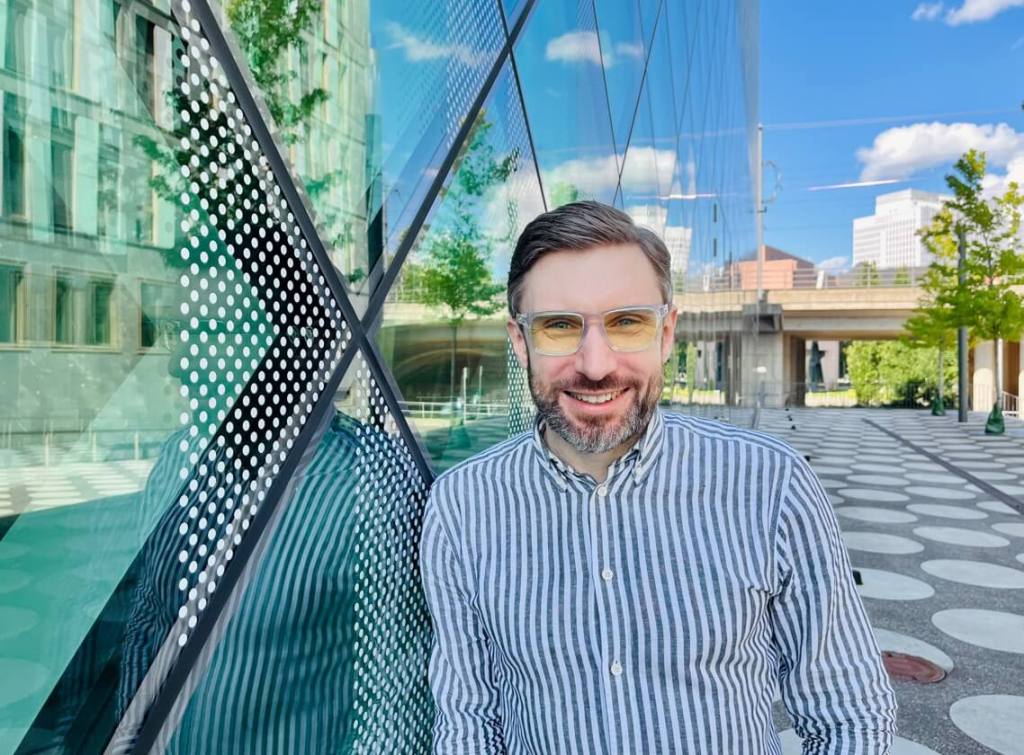
In Ageless, a computational biologist and science writer, Dr. Andrew Steele, challenges the idea that aging is inevitable. We met in Berlin to explore the research and controversy behind longevity, the three most promising anti-aging therapies emerging from the labs, and the implications of longer lives, from pension system collapse to existential boredom.
Is aging a disease or a natural part of life?
I’m actually undecided on whether it should be called one. It’s a provocative debate, and an important one because reimagining how we think about aging might be one of the most crucial shifts we can make in medicine.
Biologically, I hesitate to call aging a disease because it doesn’t fit the typical model. Diseases like cancer, heart disease, or the common cold usually have clear causes. For example, if you remove the virus that causes a cold, the person will recover. Aging, on the other hand, is a gradual, widespread decline affecting nearly every part of the body, increasing the risk of many other diseases. So, in terms of how we define a “disease,” aging doesn’t fit neatly.
There are also social reasons. I don’t want to label people in their 50s, 60s, or 70s as “diseased” simply because they’ve reached a certain age.
Still, the debate matters. Right now, both society and medicine treat aging as a natural, unavoidable decline. But once you understand the biology of aging, it becomes clear that it’s the root cause of nearly all major diseases of modern life: cancer, heart disease, dementia, and stroke. They’re all driven by aging.
To put it in perspective, high blood pressure doubles your risk of a heart attack. But being 80 instead of 40 increases that risk tenfold. So even if you eat well, exercise, and manage your health, aging still catches up with you.
That’s why this matters. Recognizing that aging drives disease, and that we may be able to slow or even reverse aspects of it, is a major shift in medical thinking. Whether we call aging a disease or not is an interesting question, but the key point is this: aging isn’t just inevitable. It’s something we can potentially treat.
Longevity has recently gained a lot of interest: from startups and investors to people discussing it on social media. But is it already a science, or still just a social concept?
I think longevity is both a science and a concept. There’s clearly a hype cycle happening right now. But behind that, there’s also real, exciting science. And it’s hard to say how much one feeds into the other.
In the lab, we now have dozens of ways to slow down or even reverse aging. We can extend the lifespan of mice, keep them healthier, free from disease and frailty, essentially keeping them younger for longer. That’s hugely exciting. There are so many different approaches that it would honestly surprise me if none of them work in humans. Sure, mouse studies don’t always translate, but if we have 20 shots, odds are at least one will work.
That’s why I talk about this as much as I can. But on the flip side, the hype has attracted influencers and marketers who’ve simply rebranded what they were already doing as “longevity.” Some of that’s valid – regular exercise, good sleep, and healthy eating genuinely slow aging.
Take exercise, for example. It doesn’t just strengthen your muscles or heart, but it also lowers your risk of dementia, certain cancers, and other age-related conditions. It literally slows down the aging process. So when a fitness influencer calls that “longevity advice,” they’re not wrong.
The problem arises when people go beyond the basics, pushing supplements or expensive diagnostics without solid evidence. In many cases, consumer products are advancing at a pace that science cannot support.
That puts me in a tricky position. Beyond the proven fundamentals, I have to be skeptical. Sometimes it sounds like I’m dismissing the whole field, when in reality, we may be just a few clinical trials away from the biggest revolution in medical history.
It’s a tough balance to strike: most of what you see on social media is nonsense, and yet, longevity science could truly transform medicine.
We already have the simplest and cheapest way to extend lifespan: prevention. So why are we still searching for longevity drugs? Does that mean prevention doesn’t work as we hoped?
In a way, yes. But not because people are weak or lack willpower. The truth is, social systems often make prevention hard.
Take Berlin, for example. It’s easy to cycle around the city. I bike to meetings all the time. But that’s not true everywhere. In rural areas, if your job is 10 or 15 kilometers away, cycling in the rain on a winter morning may not be realistic, no matter how fit you are.
And then there’s time. I’ve just had a baby, so I’ve got an eight-month-old at home. I know I should be exercising more, but I’m not. There’s a constant time crunch. For people with multiple kids, shift work, or more than one job, finding time to eat well and exercise consistently is incredibly difficult.
So yes, prevention works. But it’s not always accessible. It’s about infrastructure and lifestyle, not just personal choices. I’m a big believer in public health: healthier food environments, more support for active lifestyles, better policy. And we’ve had real wins. Smoking rates have dropped thanks to taxes and education, and so have lung cancer rates.
But what excites me about longevity science is this: it’s cheap and massively underfunded. Take the U.S. National Institute on Aging. Since the 1970s, it has spent around $7 billion on aging research. Compare that to the UK’s NHS, which spends over £100 billion every year. That’s more than ten times what’s ever been spent on aging science, every single year.
I’m not saying we should cut healthcare to fund research. But the scale matters. Public health and healthcare are extremely expensive, and often reactive. Now imagine if we had £100 billion to invest in aging research. We could develop multiple therapies that meaningfully extend healthy lifespan. But if we put that same money into the NHS, it would help, of course. However, it wouldn’t make people live five years longer.
Even in Germany, public health spending is spread thin. €100 billion across 83 million people works out to about €1,000 per person. That might buy a bicycle, but it won’t build a lot of cycle paths, and it won’t radically transform diets or routines over a decade. But investing a fraction of that in aging science could produce a drug that adds healthy years of life and potentially deliver returns in the trillions.
So yes, we should do both: prevention and science. But in terms of impact and cost-effectiveness, the science might give us the biggest return of all.
Let’s talk about specifics. What are the most promising interventions we’ve seen for slowing or stopping aging in the lab?
I’ll give you three.
First, rapamycin. It was discovered back in the 1970s and is already used in humans to prevent organ rejection and to coat heart stents. But in mice, it does something even more interesting: it slows down aging and helps them stay healthier for longer.
One of the most remarkable results came in 2009 from the Intervention Testing Program, which is pretty much the gold standard for mouse aging studies. Researchers gave rapamycin to mice late in life, expecting it might be too late to see any effect. But the mice still lived 10–20% longer. And they were healthier, too.
Since then, we’ve done dozens of experiments. Give it early, give it late, short-term or long-term – it works. It even works in marmosets, which are primates, so closer to us. It seems to work across species: yeast, worms, flies, mice, monkeys. That’s rare.
And remember, it’s already being used in people. We know it’s safe. But there’s still no clinical trial testing it in healthy humans specifically for longevity. Why? Because there’s no patent. No pharmaceutical company stands to profit from it. So we need public or philanthropic funding. Honestly, $100 million could give us answers.
Second, senolytics. These are drugs that clear out senescent cells – cells that have stopped dividing but don’t die. They just hang around, creating inflammation and contributing to aging and disease.
In 2018, scientists gave senolytics to mice and saw huge effects: less cancer, better heart health, improved brain function, and better physical performance. And they didn’t just feel younger, they actually looked younger. You can search for images of these mice online. The difference is visible.
Human trials are already underway, starting with diseases where senescent cells are known to play a role. But the hope is that one day, we’ll be able to give these drugs to healthy older adults to slow down biological aging, just like in the mice.
And third, epigenetic reprogramming. This one’s further out, but it could be massive. As we age, our epigenetic markers – the chemical signals that control how our genes are expressed – get messy. Cells start to forget what they’re supposed to be. That leads to dysfunction.
Shinya Yamanaka discovered four genes that can reprogram adult cells back into a stem-cell-like state. Scientists have experimented with briefly activating these genes in mice, not permanently, just a couple of days a week, and the results were amazing. The mice got healthier, and in some cases, they lived longer. It even worked on cells taken from a 114-year-old woman. Some signs of aging were reversed.
Is it now ready for clinical use? No, not yet. We can’t safely deliver these genes to every cell in the human body. But there’s a huge amount of investment pouring into this space. Altos Labs, for example, has raised $5 billion. Other companies are investing hundreds of millions. This isn’t science fiction anymore; it’s something we’re actively working on.
These are promising experiments in a lab. But what about right now? Is there anything people can do today to age more slowly, beyond the usual advice?
I think so. But first, let’s not dismiss that “usual advice.” Things like regular exercise, good sleep, and a healthy diet literally slow aging, and it’s backed by science.
But there are also a few surprises. One of my favorites? Brushing your teeth. Back in the 1990s, researchers started noticing that people with better oral health had a lower risk of heart disease. At the time, it wasn’t clear if that was a direct link or just a sign of better overall habits.
Now, we have a better understanding. One of the key hallmarks of aging is chronic, low-level inflammation, and poor oral health is a major source of that. When your gums are inflamed from bacteria causing tooth decay or gum disease, your immune system fights back, but it never fully wins. That ongoing immune response keeps your body in a constant state of inflammation, which can accelerate aging.
We’ve even found gum disease bacteria in the brains of people with dementia. We don’t know yet if that’s a cause or just a correlation, but the connection is strong enough for me to say: brush and floss. It might be one of the easiest anti-aging interventions out there.
Right now, we’re seeing rapid advances in artificial intelligence. Could AI help us discover new longevity pathways?
Absolutely. I think AI will be hugely important in the future of longevity medicine, and in a few different ways. One thing researchers are already doing is feeding known longevity drugs into AI models to generate new hypotheses, new compounds, new pathways, and new targets. AI is also proving itself very good at understanding complex biology.
Take AlphaFold, for example. It’s an AI model developed a few years ago that predicted the 3D structures of proteins more accurately than we’d ever done before. And proteins are fundamental to how our bodies function. Understanding their shapes gives us insight into how they work, how they interact, and how they can go wrong in disease and aging. So this shows AI can tackle extraordinarily complex biological problems.
But there’s a catch, and I think this part often gets overlooked. The reason AlphaFold worked is that it had access to a huge, high-quality dataset. For decades, scientists had carefully determined and uploaded over 200,000 protein structures into a global database called the Protein Data Bank. That’s what AlphaFold learned from. No data, no breakthrough.
The same thing applies to large language models like ChatGPT. They work because they’ve read millions of books and websites, essentially everything humans have written down. That’s what allows them to have intelligent conversations. But again, without that vast dataset, they wouldn’t work.
So when it comes to AI and aging, we face a challenge: we don’t yet have enough good data. To truly train an AI model to understand aging, we’d need longitudinal data from thousands of people across different countries, ethnicities, genders, and health backgrounds. We’d need to collect everything: DNA, blood tests, epigenetics, microbiome data, lifestyle info. And we’d need to follow those people over many years to see how they change as they age. That kind of dataset just doesn’t exist yet at the scale AI needs.
Now, maybe we can address some of the aging issues with less data. Maybe we’ll get lucky. But if you want to understand 10 years of aging, you have to wait 10 years to collect that data. AI can’t shortcut time.
That’s why, more than building better AI models, the most critical step we can take now is to start collecting the right kind of data. We should be asking ourselves today: If we want an AI model to crack aging in 2035, what data do we need to start collecting in 2025? AI will connect dots that humans can’t. But we need to give it the dots first.
At the start of your book, you mention animals that seem to age incredibly slowly. Isn’t it frustrating that, despite all our intelligence, humans still age so quickly while tortoises or certain fish can live far longer?
It does indeed feel a bit unfair. We often quantify aging by how the risk of death increases with time. For humans, that risk roughly doubles every eight years. Early on, it’s tiny, less than 1 in 1,000 in your twenties or thirties. But by 90, your annual risk of death is about 1 in 6. That rate of increase is called the mortality rate doubling time.
Some animals age much faster. A mouse, for example, doubles its mortality risk every few months. But others age more slowly. And a few, by that statistical definition, don’t seem to age at all.
The Galápagos tortoise is a classic case. Its risk of death stays flat over time. There are even animals whose risk of death decreases as they age. They get bigger and stronger, and evolution has favored keeping them alive longer because it helps them survive and reproduce.
So why didn’t humans evolve that way? Well, one theory goes back 65 million years. When the asteroid hit what’s now the Gulf of Mexico, it wiped out most large surface-dwelling animals, including the dinosaurs. The survivors were mostly small, burrowing creatures, our early mammalian ancestors. They were vulnerable: easy prey, exposed to injury, infection, and the cold. Their best evolutionary strategy was to grow quickly, reproduce early and often, and not invest in longevity, because chances were, they wouldn’t live long anyway.
We’ve come a long way since then. Humans now live far longer than mice or our early ancestors. But we may still be limited by that deep evolutionary history. Meanwhile, reptiles and fish followed different paths, and some developed what’s called negligible senescence: they simply don’t age.
What’s exciting is that this shows aging isn’t inevitable. It’s not some universal biological rule but an evolved trait. And if evolution has solved it in some species, maybe we can too.
So, global life expectancy is over 73.3 years right now. When we manage to increase it thanks to longevity science, won’t we get trapped in wanting more and more? First 100, then 120, 200… Where does it stop? Is there a danger in that greed to live forever?
I don’t think that’s a danger, because what we’re really seeking is health. We often frame this conversation in terms of lifespan because it’s easy to quantify: “I want to live to 80,” “I want to make it to 100.” But what draws me to longevity science is the healthspan, essentially staying well for longer.
Right now, while I’m healthy, I don’t know how long I want to live. But I also can’t imagine wanting to die if I’m still in good health. I’d like to enjoy time with family, pursue hobbies, travel, and learn new things. There’s more to do than I’ll ever fit into one lifetime, whether I live 80 or 120 years.
So is it selfish not to want dementia? Is it selfish to want your mum, your partner, or your friends to stay sharp and mobile into old age? I don’t think so. That’s just human.
The notion that pursuing a longer, healthier life is selfish comes up frequently. But I’d argue the opposite. Staying healthy means you can keep contributing, economically and socially. You’re not as much of a burden on loved ones or healthcare systems. You can support others for longer.
So yes, it’s a desire. But it’s a deeply pro-social one. And maybe the reason it raises concerns is that it might actually work. Longevity science could be the most effective tool we’ve ever had to improve quality of life at scale. And that’s worth aiming for.
But what about the potential downsides of longevity: overpopulation, pension crises, or even the fear of boredom and loneliness as friends pass away?
Boredom often stems from frailty, isolation, and loss of social connections. But if people remain healthier longer and can still travel, play sports, and socialize at 80 or beyond, I don’t think boredom will be a major issue. Sure, if I reach 150, maybe I’ll have experienced everything and get bored. But that’s a good problem to have. I’d much rather face that choice than have my life cut short by cancer or dementia.
As for ethical concerns like overpopulation or retirement systems, these are valid questions. But we need to consider the bigger picture. The greatest impact of longevity science won’t be crashing pensions but drastically reducing dementia, cancer, and chronic illness. If that requires rethinking how we structure retirement or society, then that’s a conversation worth having.
Some people worry about dictators living forever if we cure aging. But remember, dictators rarely die peacefully in old age; most lose power through coups or conflicts. Even if aging were eliminated, studies suggest it would extend a dictator’s life by only about five years. Is it reasonable to condemn millions to Alzheimer’s and heart failure just to reduce a dictator’s lifespan by a few years? Clearly not.
I like to turn the question around. Imagine a world where aging didn’t exist and people could live to 150, free from cancer and dementia. If we then faced overpopulation or climate collapse, would we choose to reintroduce aging to solve those problems? Would we deliberately design decades of frailty, mental decline, and suffering just to cut carbon emissions? I wouldn’t. I’d focus on reducing emissions, cutting waste, and finding humane solutions. So no, we shouldn’t halt aging research out of fear of potential future problems that may never arise.
You represent a softer, science-based approach to longevity. But there are more radical ideas, such as using nanobots to repair cells and thus live forever. Do you think that vision will eventually replace the softer one?
We need to focus on what science can actually do right now. If you want to live forever, the first step is to get to 80 in good health. Then 90. Then 100. That’s how it starts. The biology and medicine we have today are already powerful enough to help us get there.
The risk with focusing too much on AI and nanobots is losing sight of what’s already within reach. Maybe there are hard biological limits. Maybe we can’t go beyond 120. The oldest person on record was 122. Maybe we’ll hit a wall. But we don’t know that. So the pragmatic approach is to focus on staying healthy for as long as possible, and build from there. Once we do that, new discoveries will come. Maybe some will lead to radical therapies. But for now, I’m not placing my bets on nanobots.
Will we live forever someday? “Forever” is a very long time. People still get hit by accidents, there are pandemics, wars, and cancers in young people. But if you came back in the year 2500 or 3000, and humans are still here, I’d be surprised if we’re still aging. I think aging is solvable – not tomorrow, but maybe in a hundred years. That timeline depends on how much we invest.
Currently, most affluent countries allocate a mere fraction of a euro per person annually to aging research. Until that rises to euros, tens, or hundreds per person, we won’t see breakthroughs at the speed some hope for.
It means we need to invest more in longevity. Why do governments focus so heavily on curing diseases rather than preventing aging itself?
It’s a complex problem with many roots, and there’s no simple answer. In fact, it’s one of the reasons I’ve recently shifted into policy work. I’ve just started a think tank called the Longevity Initiative to help explain to governments why this is so important.
First, there’s an awareness problem. Most politicians, and even many scientists and doctors, simply aren’t aware that aging biology is a serious scientific field. Despite all the buzz around longevity, most people still think it’s just about diet and exercise.
Part of that comes down to communication. Online influencers often rebrand familiar health advice as “longevity,” which muddles the waters. Even brilliant researchers in related fields usually haven’t encountered the cutting-edge science of aging.
Take my wife, for example. She’s a doctor. When I first met her, she thought I was crazy talking about slowing aging with drugs. And she was a medical student then! She’s young enough that she’ll probably prescribe these treatments one day, yet not a single lecture or textbook page covered aging biology. We train doctors and scientists to be skeptical, which is important. But that skepticism becomes a barrier when they’ve never been presented with a credible case for the science. They’re conditioned not to believe it.
So step zero is simply raising awareness: this science is real, it’s serious, and there are promising leads that deserve rigorous testing. Then there’s a deeper challenge: the longevity field hasn’t done enough on the policy front. We lack a clear framework to present to governments.
Yes, there are big-picture numbers like the 2021 study from Professor Andrew Scott at London Business School, which estimated that slowing aging by just one year could be worth $38 trillion to the U.S. economy. That’s twice the size of U.S. GDP. Incredible, but still abstract.
If I’m in a room with the German Chancellor, I can make that high-level economic and scientific case. But then they send me to their advisors, who want specifics: How will funding be allocated? How do we prevent cancer researchers from simply rebranding their work as aging research? What are the implications for healthcare delivery, pensions, and demographics?
There are so many unanswered policy questions. To make real progress, we need to meet politicians where they are, speak their language, and show what this means for their political realities. That’s exactly what I want the think tank to do.
Two or three decades ago, longevity was fringe science. Now it’s becoming a movement, almost a religion for some. Where do you see it heading?
You definitely see people building belief systems around this moment in history, not just around longevity, but also AI, climate change, and biotech. The world is changing so fast that people are searching for meaning. But I, as a scientist, don’t think you need to believe anything radical to recognize the importance of longevity science.
Whether you’re Christian, Muslim, Jewish, Hindu, or atheist like me, most of us want to live longer, healthier lives. Most religions actually support reducing suffering. I don’t want longevity to become a belief system or a political or tribal issue. I want it to be about science improving human lives.
Aren’t you afraid of dying just before the next big breakthrough in longevity, missing your chance to live 20 or 50 years longer?
I’m not afraid of it… but it would be very annoying. [lough]
Global life expectancy is about 73 worldwide. In wealthy countries, it’s over 80. The average person on Earth is under 40. That means most people have at least 40 years left – that’s a long time for science to get to work.
If we can get the first generation of longevity medicines approved and improve public health, people might gain 50 or 60 more years. That’s enough time for breakthroughs, for AI to revolutionize research, and for long-term human studies to give us answers.
That’s why I try to stay healthy: I exercise, brush my teeth, follow the “boring” advice. And I campaign for longevity funding. Because if we invest now, maybe we’ll all live longer, healthier lives. It’s an exciting goal. It might not work because science is hard. But if we don’t try, we’ll never know. And I think it’s worth trying for.
Dr. Andrew Steele is a Berlin-based scientist, campaigner, and the author of Ageless: The New Science of Getting Older Without Getting Old. He is the co-founder of the Longevity Initiative, a policy-focused think tank working to increase government investment in aging science.

Can I ask you a favor?
Support aboutDigitalHealth.com – a nonprofit hub for trusted health innovation insights. Your donation helps keep this knowledge portal free, independent, and accessible to all. Every contribution, big or small, truly makes a difference. Thank you!
€1.00
 about Digital Health