
AI’s Giant Leap In Medicine
In his new book, Robert Wachter argues AI is shifting from documentation tools to a core part of everyday clinical workflows.
News and knowledge about digital health
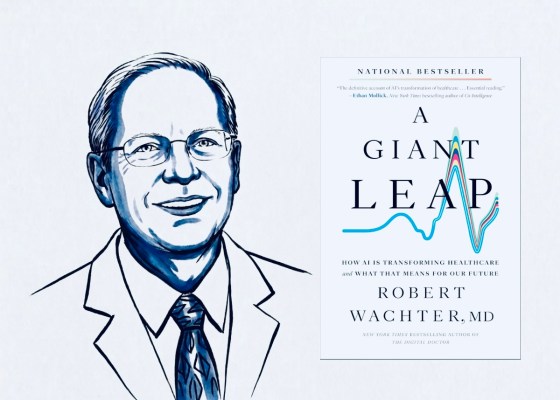
In his new book, Robert Wachter argues AI is shifting from documentation tools to a core part of everyday clinical workflows.
AI, consumer medtech, and new social trends create tension in healthcare. Money backs old systems while patients grow frustrated.

Can AI really help deliver better care? I spent a day with algorithms in medical imaging and checked how they support doctors.

We are witnessing a growing revolution around the provision of healthcare. Much is being driven by the proliferation of medical data and the technology that supports this. Future of Patient Data Report – 12 discussions across 11 countries, views from over 300 experts.

Virtual visits, digital doctors, automatic operating machines, implanted health monitoring sensors or robots as carers – many people are afraid of this vision of a future where the machine does away with man.

Artificial intelligence systems being used to determine the best possible therapy based on an analysis of the medical data filing systems and the patient’s individual profile offer a chance of more effective treatment and better disease prevention.
Gamification is the use of games or, more precisely, the mechanisms of engagement, entertainment and relaxation present in them for other purposes, such as to change behavior, educate or even treat some diseases.
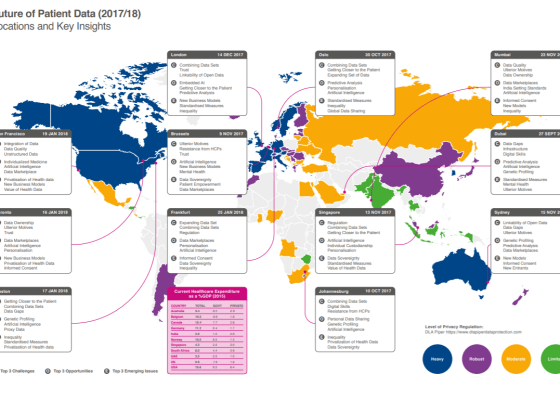
There is great potential for the future of patient data but also lots of challenges. There are many patient benefits as well as multiple additional opportunities for the broader community to bring to the sector.

Innovations such as telemedicine, virtual reality, Big Data, IoT and robotics are often talked about with confidence, but so far have rarely been experienced in day-to-day practice.

The European Commission is proposing to create the first ever Digital Europe programme and invest €9.2 billion to align the next long-term EU budget 2021-2027 with increasing digital challenges.

The second annual HIMSS Impact event, which runs 17-18 October at the Hasso Plattner Institute (HPI) in Potsdam, just outside Berlin, will focus on two distinct themes in two programme tracks.
 about Digital Health