
 Posted by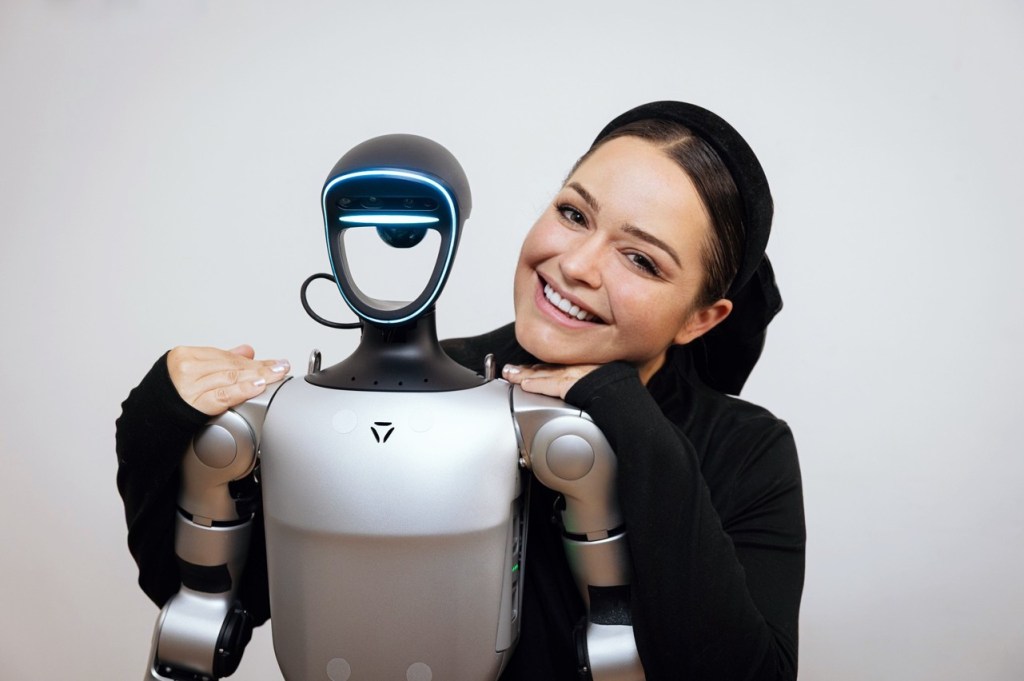
What would it be like to live with a humanoid robot? Emily Kate Genatowski, an AI Domestic Robotics Researcher, has been doing so for over a year. How does it feel? And why is she now advocating for the regulation of robotic autonomy?
You have been living with a humanoid robot for a year. Is the robot still a robot for you, or has it already been given a name and a kind of personality?
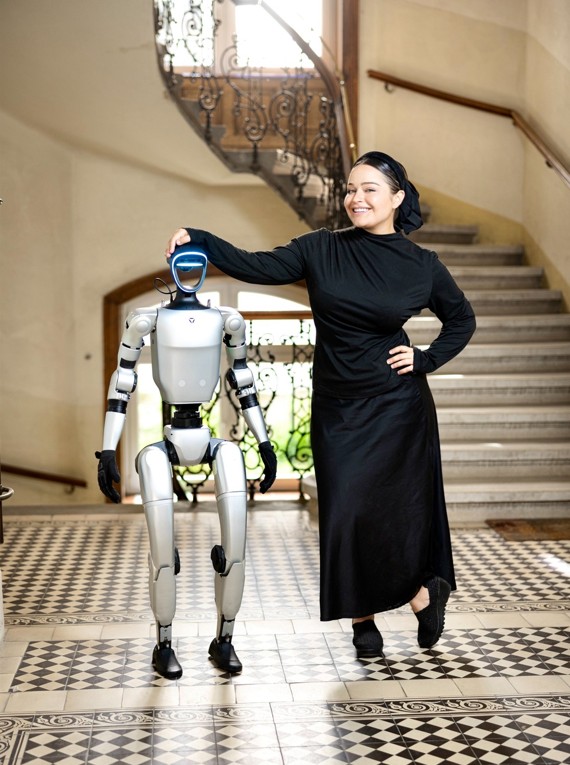
It’s been given a name, Tova, in order to reference it, but it actually doesn’t have a personality. There’s a big distinction between “companion” or “social” robots and functional robots. Tova is designed to be a domestic labor robot and has no hardware in its face to emote or deliver an emotional interaction. It does, however, have a large language model. In theory, the large language model could, like your Chat GPT, Claude, or Gemini, bring a bit of personality and connection to the robot-human relationship.
The issue is that to be compliant with GDPR and EU AI Act regulations, the LLM cannot store any biometrics or additional chat data, as it is proprietary software based in China. Due to this legal technicality, the LLM functions more like an early Siri or Alexa than the advanced chatbots we have grown used to today.
Have you built a relationship with the machine, as we used to with other humans? Or has the robot always been just a tool, a machine for you? Are you angry with it sometimes? Or smile together?
The robot is firmly a system in my eyes. I can grow frustrated with the logistics of operation, but since it cannot store data, I cannot reasonably synthesize a relationship with it. This distinction and the lack of relationship, even after living next to it for a year, highlight the technical infrastructure that belies the connections certain people feel to their chosen AI companions. A “companion” robot that focuses on emotive conversation and expression would be better suited to relationship building.
Did the robot make it easier to build healthier routines, such as exercise, sleep discipline, or reducing stress, or did it sometimes create more mental load instead?
The robot absolutely created more mental load and caused frustration. This is purely a function of the timing of my research. My research is specifically designed to precede full use and functionality. The idea is to parallel the research of friction in deployment as it relates to legal regulation, institutional policy, and digital and physical infrastructure.
I aim to create tangible confrontations with each area, run into the problems adopters will later face, and then introduce these issues into public debate and craft solutions in advance of mass adoption. In this sense, if I weren’t finding frustration and pain points, I wouldn’t be accomplishing what I set out to do.
Many people imagine domestic robots helping elderly or chronically ill patients. Based on your experience, how realistic is that vision today?
I think, for this, we need to take into account the current state of the AI field and how physical AI fits into it. There is a distinction between companion robotics, which primarily focuses on addressing loneliness by developing LLMs that build relationships with patients, and physical assistance robots, which could help with the logistics of care.
I think we will see companion robotics first. Software AI is much further along than Physical AI, and elderly populations and ill patients are protected groups that require delicate, conscientious physical care. It is more likely that we will see “personal delivery robotics” and “cleaning robots” entering hospitals and care homes to relieve other forms of manual labor before we see care robots physically interacting with patients.
What is the biggest struggle with it?
The robot is actually very heavy! It’s around 50 kilos, and I have to transport it multiple times a week. Transporting it entails lifting it, folding it into its carrying case, moving the case during the journey, and unloading it on site where it needs to be. Through these logistics, I’ve actually gained quite a bit of muscle!
What surprised you most about the emotional or psychological impact of sharing your home with a robot?
My research showed me just how important the underlying LLMs and legal compliance are in developing companionship relationships with technology. The stark contrast between my dynamic with Gemini or Chat GPT and my robot, despite it living with me, is quite telling. The architecture of a software LLM, such as its sentiment analysis, compliant data storage, and text-to-text format, all factor into the emotional and psychological relationship with the system. With the robot, its design, engineering, and legal compliance mean it does not have the benefit of any of those factors, and as such, I experience a lack of companionship it provides in my home, in contrast to LLMs or even a pet.
Healthcare systems are struggling with staff shortages and aging populations. Do you believe humanoid robots could realistically support care delivery in the future?
Support is the operative word. Yes. Absolutely. I do not think that humanoid robots could take over entire care strategies, but they can surely be part of the team. Robotics is an incredible asset in high-risk labor, whether that’s handling extreme temperatures, lifting heavy weights, or executing highly intricate sequences. In healthcare, the use of robots could be incredibly valuable for treating communicable diseases or for the urgent delivery of medications in situations where speed is critical to patient outcomes.
What are the biggest limitations preventing domestic robots from becoming useful health companions today?
The biggest limitations today are legal regulations, cultural acceptance, and environmental and task consistency. Legal regulations make entry into highly regulated sectors extremely challenging. Healthcare and dealing with protected groups, including the infirm and the elderly, are both tricky sectors for innovation. Cultural acceptance is shifting, but there are many populations resistant to robotics. Robots also always perform at their safest and most efficient when they have a consistent environment to exist in and tasks to complete. In healthcare, that would dictate the specific type of work they are deployed to handle, rather than whether they could operate within the sector.
You often speak about regulation and infrastructure. Are healthcare systems and societies prepared for robots that collect sensitive behavioral and health-related data inside homes?
The regulation in the sector right now is clear, but in complying with it, the robots will lose functionality to the point of obsolescence. We will need to adapt regulations to keep pace with innovation in the field so that patients and caregivers can truly benefit from this new technology.
When robots get better, will people trust them and accept them as daily companions?
We are currently dealing with a very difficult zeitgeist concerning AI. Public opinion in the West is marred by a heavy media focus on labor displacement, economic anxiety, privacy concerns, surveillance concerns, environmental impacts, data center construction, and lawsuits over the sourcing of training data. Trust and acceptance will take root in public opinion only when people see the value AI can bring. It will take time to establish this trust and work against the tide of current public opinion.
Would you change your robot for a better model, or would it be emotionally too hard now?
My main focus is now on influencing regulation surrounding identity frameworks across the EU for autonomous systems and standards of robotic autonomy, and on crafting solutions for the insurance sector to bridge the liability gap posed by autonomous robotics. I don’t think introducing a new model would change much.
I would, however, be interested in following the field of EU robotics and monitoring how we navigate the challenge of synthesizing the incredible production-efficiency advantage that hardware manufacturers in the East have with the strict protective legal frameworks we have in Western markets.
Thank you!
