
 Posted by
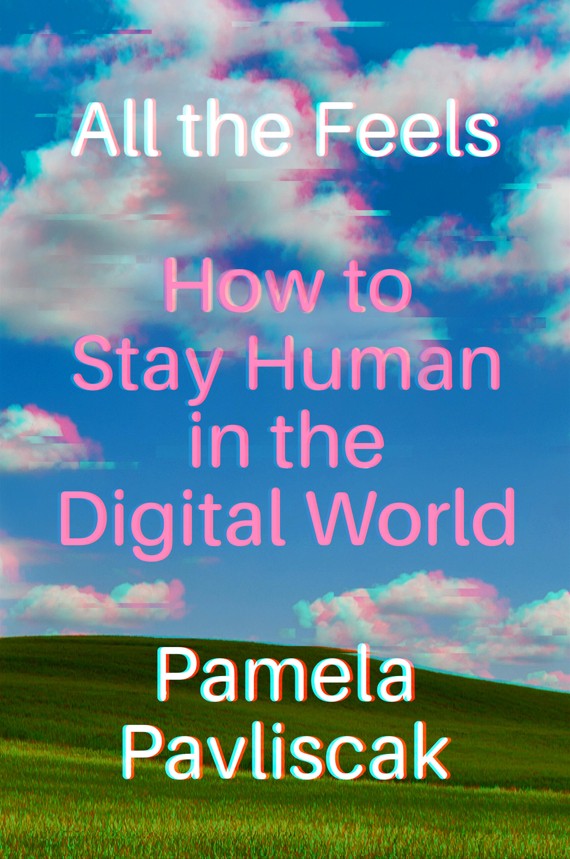
“Every technology creates an emotional experience, whether the designers planned one or not,” says Pamela Pavliscak, tech emotionographer and author of All the Feels. How is technology changing the way we experience, express, and understand our emotions? And how can we use it to remain human in a technologized world?

You are a cyber-ethnographer. What does it mean to “study the future of feelings”?
I’m a design researcher, so ethnographic-style research, which consists of observation and in-depth interviews, is an important part of my methodology. Cyber ethnography applies that to digital spaces, by observing how they live and make meaning online. And I’m especially interested in the emotional layer of experience.
Studying the future of feelings means looking at how technology changes what we feel, how we recognize and name feelings, and what we do with them. Technology does not invent emotion from nothing. We have always felt longing, jealousy, embarrassment, tenderness, and uncertainty. But it gives those emotions new dimensions. Waiting for a letter is different from watching three typing dots appear and disappear. Missing someone is different when you can see their location but have not heard from them. Seeking reassurance is different when AI produces it on demand.
The future of feeling is found mostly in ordinary moments. My work is to notice those moments early and ask what kind of technologies and culture we want to build with them.
When organizations like Google or IKEA reach out to you, what problems do they want to solve, and how can you help?
Organizations work with me when they want to engage with customers in a more meaningful way in the long term. A company developing an AI service might want to know when assistance feels supportive and when it begins to feel intrusive. A retailer might be exploring how digital tools can preserve discovery, imagination, and sensory pleasure rather than reducing shopping to efficiency.
A workplace platform may need to understand why constant visibility makes employees anxious even when the stated goal is collaboration. There’s often some overlap with typical issues of accessibility, usability, and trust, but my work goes beyond that to explore the deeper emotional impact.
For these projects, I combine ethnographic research with projective methods, like moodboarding and metaphor-based scenarios, to uncover new possibilities. I also use a proprietary emotional mapping framework to connect system-level emotional mechanics to design implications. I developed this out of frustration with addictive design truisms.
Notifications do create anxiety, and infinite scroll can lead to compulsive behaviors, but conversations often end there. I’ve uncovered so many more platform and interface mechanisms that influence our emotions, and in turn our behaviors, and that are still largely invisible but can be powerful.
Has your research improved your interaction with technology?
It has made my relationship with technology more intentional, although it’s certainly not perfect! I still regularly lose 20 minutes to dog rescue videos and succumb to green-dot anxiety (noticing that everyone is active on a platform) once in a while.
I feel you…
The biggest change is that I no longer treat every uncomfortable feeling as a personal indictment. I try to understand the feeling. Am I replying because I care, or because an unread badge has converted a relationship into an unfinished task? Is an AI helping me think, or is it taking me somewhere I don’t want to go? That means I can then make a choice about how I want to be, whether it’s to move a conversation to another channel or limit my time on an activity.
My research has also given me a new appreciation for smaller emotional moments. I notice ambient forms of care like the friend who sends a perfectly timed meme or an addition to a shared Pinterest board.
I aim for self-actualization over self-optimization. I try to pay attention to the practices that expand my emotional life and the ones that flatten it, and then adjust accordingly.
You often use the term neo-emotions to describe new emotional experiences shaped by new technologies. What are neo-emotions?
Neo-emotions are emotional experiences that emerge when familiar human feelings meet unfamiliar technological conditions. They are not necessarily brand-new emotions in a biological sense. They are new configurations of emotion. Some emerge from experts and are the subject of academic study. Phantom vibration syndrome is the sensation that your phone has buzzed when it has not. The body has learned the notification so well that it begins anticipating the machine. Other terms rise up from collective experience, like corecore, to describe not only an aesthetic but a newly felt sensory overload.
AI is producing another cluster of neo-emotions. AI brain fry is the mental fog that follows too much prompting, comparing, revising, and deciding among endless generated possibilities. At the opposite end of the spectrum is capability glow, which is the burst of possibility people feel when AI suddenly enables them to do something they could not easily do before.
Naming these experiences matters because language makes feelings more available for reflection. Once we can say, “This is green-dot anxiety” or “I have AI brain fry,” the experience stops looking like an inexplicable personal defect and becomes something we can discuss, design for, or laugh about together.
Even if we communicate online, the feelings move between smartphones and computer screens. We use emoticons and like/dislike buttons. Are there other ways that technology helps us to express how we feel online?
Digital emotional expression has become far richer than a menu of reaction buttons, and so much of it happens through creative indirection. A meme can communicate a complicated emotional state more precisely than a paragraph. A reaction GIF adds timing, gesture, facial expression, and cultural context to a conversation. Sending someone a stream of animal videos may be a low-pressure way of saying, “I am thinking about you.”
People also create emotional dialects inside relationships. A certain punctuation mark may signal irritation in one family and warmth in another. Friends develop shared stickers. Young people can be especially adept at this kind of creative expression.
We can forget how technology can make emotional expression more accessible too. Someone who freezes during a face-to-face conversation may be able to articulate their thoughts more clearly in a text message. Asynchronous communication provides time to compose a difficult thought. Avatars can give people enough distance to explore parts of themselves that they might not otherwise.
Of course, platforms also compress emotion. A like button can turn sympathy, acknowledgment, agreement, and obligation into the same tiny symbol. Emotionally intelligent communication in the digital world happens when people invent a more nuanced language of emotion that doesn’t rely on interface defaults.
You already mentioned phantom vibration syndrome and AI brain fry. When I watched your TED talks, I learned even more new expressions like screen apnea or vibe whisperers. Which ones should we know, and what do they mean?
There is no shortage of important, new emotional terms that can help us understand ourselves and each other. Screen apnea describes the tendency to hold our breath or breathe shallowly while concentrating on a screen, especially during email, scrolling, or stressful work. It is a good reminder that digital experiences are bodily experiences.
Orthosomnia refers to becoming so preoccupied with achieving “perfect” sleep data that the tracking itself creates anxiety and worsens sleep. Even if you don’t track your sleep, I think this emotion speaks to our instinct to rely on machine-produced data over personal experience that is relevant in so many other contexts. And, of course, the strong emotional drive to optimize and maximize is pervasive.
Main character syndrome is a concept that stems from visibility pressures of being online. Like a lot of new feelings, it’s ambiguous too. It can be seen as pure narcissism, where you inflate your own importance. It can also function as a valuable way to zoom out from the everyday and savor the small moments.
What I love about new emotion expressions is that naming gives us a way to discuss complicated emotions, often with a bit of humor. Sometimes the first step toward agency is discovering that you are not alone with your feelings.
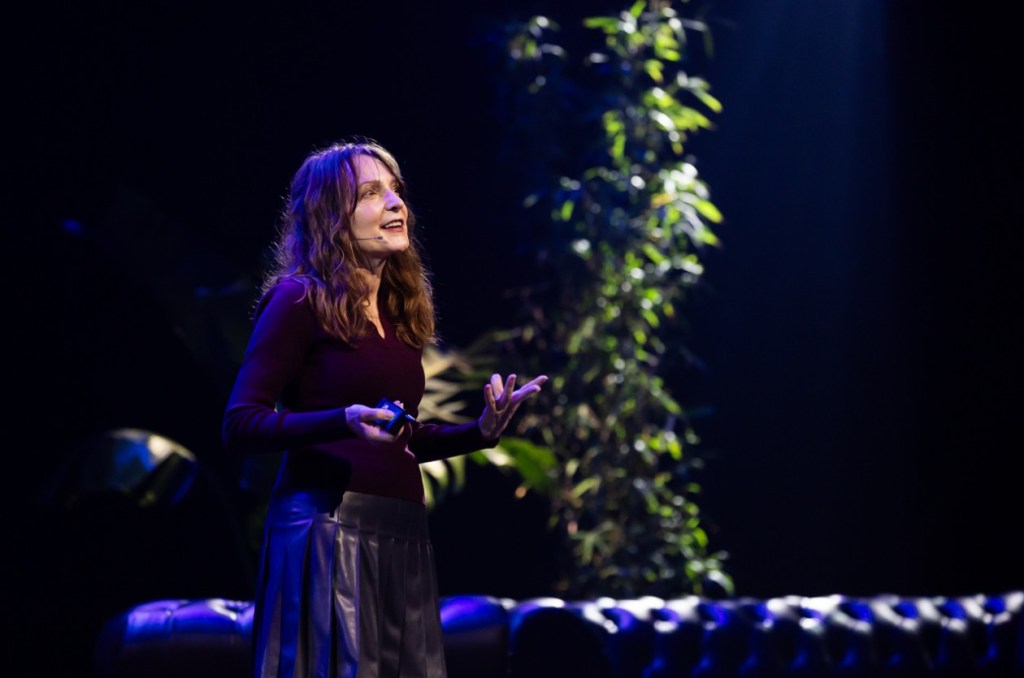
In your latest book, All the Feels, you argue that being online can enrich rather than erode our emotions. What surprised me is that digital detoxes do little to boost happiness. What do we do wrong when using technology, and how can we improve it?
The research on digital detoxes is mixed. Some people benefit from a break, particularly when their use has become compulsive or is interfering with sleep. Other studies find little consistent improvement in positive emotion or life satisfaction from temporary abstinence alone. That makes sense because the internet is not one emotional experience. A late-night spiral through hostile content is different from talking to a close friend, making art, finding health information, or joining a supportive community.
The detox model encourages an on-or-off view where technology is the toxin and absence is the cure. But most people return to the same devices, platforms, habits, and pressures afterward. They may also return with more shame because they failed to remain perfectly disconnected. Or they may return feeling like their abstinence justifies the reward of a little more time online.
A better approach is to ask more specific questions. Which activities leave me feeling connected, capable, or curious? Which leave me agitated, diminished, or numb? What happens at different times of day? Who am I with?
That way it’s possible to make more durable changes. Follow people who add texture rather than outrage. Move meaningful conversations out of public performance spaces. Create friction before a behavior you typically regret and ease around a behavior that has more value for you. Sometimes logging off is exactly right, but it should be one option and not our entire emotional philosophy.
You promote “emotionally intelligent design.” What technologies are already following this principle?
Emotionally intelligent design begins by recognizing that every technology creates an emotional experience, whether the designers planned one or not. The question is whether that emotional effect supports the person’s goals and dignity.
Some of the best examples are modest. A financial app that explains an error without making the user feel foolish is practicing emotional intelligence. A health portal that distinguishes an urgent result from an ordinary update prevents unnecessary panic. A feature like “undo send” that restores agency.
I also look for technologies that do not pretend to know more about our feelings than they do. An emotionally intelligent AI should communicate uncertainty, respect boundaries, avoid manufacturing dependency, and understand when reassurance is inappropriate. There are promising tools designed around mental-health support or social connection, but I hesitate to give any company a permanent gold star. The same service can include a humane feature and an exploitative business model. I think that emotionally intelligent design is less about technology reading our feelings and more about it giving us room for feeling them.
There has been a lot of criticism recently regarding the impact of social media and the use of chatbots. Some countries have banned the use of platforms like TikTok or Instagram among teenagers. You talk about “algorithmic amplification of outrage”. How do you view social media’s role in amplifying negative emotions like anger or fear, and what consequences can it have?
Social media did not invent outrage or cruelty, but it did create systems that could predict which emotions will drive attention. Engagement-based algorithms often privilege content that generates an immediate reaction. Anger is especially efficient because it motivates people to comment, repost, correct, attack, or recruit others to their side. Fear holds attention because the mind treats potential danger as unfinished business. Over time, it can change which feelings are socially rewarded. Emotional intensity starts to function as evidence of commitment. Nuance becomes suspicious in those circumstances.
It makes sense that governments would experiment with protections for the most vulnerable populations, starting with young people. The practical difficulties of age verification make it complicated, but I do think that bans from certain environments can sometimes be meaningful. If everybody is offline together in the lunchroom, that seems like a positive for social engagement (unless they go out to their cars to use their phones like at my own daughter’s high school!).
Outright bans, though, can make it more difficult to maintain friendships, find community beyond the confines of a neighborhood, or explore identity. All really crucial aspects of growing up in our mixed digital-physical reality world.
Bans also let tech companies off the hook. They aren’t required to make changes that would result in safer defaults or limit exploitative engagement mechanics. They are also emboldened to collect much more personal data, and without transparency, that is problematic.
Should there be industry standards or oversight of AI emotional content to protect
users’ mental health? For example, “emotional impact” labels on apps and social
media, similar to nutri-score labels on food.
Emotion is complicated and varies so much according to personal experience, social norms, and cultural expectations. The same feature may comfort one person, overwhelm another, and affect the same person differently at midnight than at noon. That makes a scoring system complicated.
I do like the broader idea behind an emotional-impact label. Instead of assigning an app a simple good-or-bad grade, it could be a disclosure related to specific choices. Does the system simulate affection? Does it encourage prolonged engagement? Does it adapt its personality to increase attachment? How does it respond to self-harm, paranoia, coercion, or signs of dependency? Can users reset or delete emotional memory? Is the person clearly reminded that they are interacting with AI?
Alongside that kind of system, you would have to have oversight too. That might include independent testing, age-appropriate design specifications, and emotional audits. We already regulate some technologies for physical or financial risk, so I think there is a place for similar
scrutiny.
We all know that social media can be bad for our health, but we use it.
Your research highlights the positive sides of online life. What can everybody do to benefit from digital communication?
Begin by replacing the question of whether it is good or bad with asking what in particular it’s
doing for you. I’ll give you three ways to think about it.
- Emphasize active participation. Active connection tends to feel different from passive accumulation. Send the message instead of only watching someone’s life. Participate in a small community rather than treating the entire internet as one enormous room. Make something, ask a question, share a private joke, or tell someone why you thought of them.
- Curate for emotional variety. Many feeds become monocultures. Follow people who create surprise, expertise, tenderness, humor, or useful disagreement. Mute generously. A feed is not a civic duty or an archive of everyone you have ever met.
- Notice your body’s response. If your breathing has become shallow or your jaw is tight, that may be your body recognizing saturation before the conscious mind does. That is a good moment to change pace or medium.
The best approach gives us something to carry back into the rest of life.
Millions of people use AI chatbots, sometimes treating them as best friends. Can you please give some advice on how to stay human in a world where we spend more and more time with AI than with friends?
I actually don’t think we need to panic whenever someone feels attached to an AI. People form emotional relationships with characters, objects, pets, imagined figures, and technologies all the time. We are meaning-making creatures. Instead, I would examine what the relationship provides, what it asks from us, and what it may be replacing.
In my own research, I’ve seen AI become useful as a rehearsal space for difficult conversations or as a way to explore an idea without embarrassment. That can be okay to a point. The danger is that infinite patience and unlimited availability can make human relationships seem defective. Friends have needs, moods, limits, histories, and the alarming habit of disagreeing with us. That friction is part of human intimacy.
First, I would set boundaries. Don’t make AI the sole source of emotional support. Be cautious about sharing intimate information that you wouldn’t want to share with another trusted human. Avoid delegating emotional gestures that build relationships like apologies, condolences, or other messages that should show your attentiveness. Use it to prepare for a tricky conversation, then actually have the talk. Use it to generate possibilities, then pause to decide what you truly value. Use it to understand yourself better, then let others really get to know you, even if it feels vulnerable.
Let AI return something to your world.
And that’s a perfect wrap-up. Thank you!
This content is free and ad-free. If you find it valuable, please donate to help keep the website running. Thank you for your support!
Make a monthly donation
Make a yearly donation
Choose an amount
Or enter a custom amount
Your contribution is appreciated.
Your contribution is appreciated.
Your contribution is appreciated.
